Global Housing: Slums, Informal Settlements and Affordability
About 1.16 billion urban residents lived in slums or informal settlements in 2024. UN SDG 11.1 data on housing adequacy, regions and affordability.
- Updated October 1, 2026
- 5 min read
- 5 sources
- Global
Executive Summary
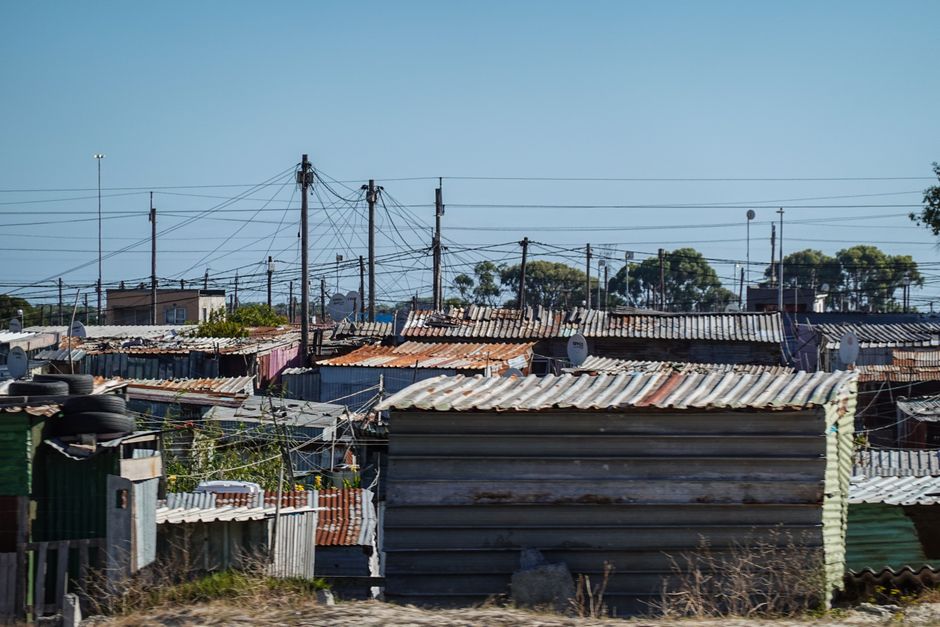
According to the UN Sustainable Development Goals Report, about 1.16 billion urban residents - almost one in four - lived in slums or informal settlements in 2024. The slum population was 1.12 billion in 2022, 130 million more than in 2015, reversing two decades of decline. Over 85% of slum dwellers live in Eastern and South-Eastern Asia, Central and Southern Asia and sub-Saharan Africa. The UN projects the total could exceed 1.2 billion by 2030 without faster action.
Key Numbers
Charts
UN SDG indicator 11.1.1, world. Observed estimates, no forecasts.
The three regions that together hold over 85% of the world's slum dwellers.
- Eastern and South-Eastern Asia362M
- Central and Southern Asia334M
- Sub-Saharan Africa265M
Overview
SDG target 11.1 aims to ensure access for all to adequate, safe and affordable housing and basic services and to upgrade slums by 2030. It is tracked by indicator 11.1.1, the proportion of the urban population living in slums, informal settlements or inadequate housing, with UN-Habitat as custodian [2][5].
In 2024 about 1.16 billion urban residents, almost one in four, lived in slums or informal settlements without access to safe water, sanitation, secure housing or adequate living space [1]. UN data put the share at 24.8% of urban residents in 2024 [4].
Historical Data
The slum share of the urban population was 25% in 2015, fell to 24.2% in 2020 and rose to 24.8% in 2022 [2]. The total slum population was 1.12 billion in 2022, 130 million more than in 2015, ending a consistent decline from 2000 to 2020 [2]. That implies roughly 0.99 billion slum dwellers in 2015 (FREEE.REPORT calculation) [2].
The number reached about 1.16 billion in 2024 [1]. Even where the share has dipped, urban population growth keeps pushing the total up [1].
Regional Analysis
Over 85% of all slum dwellers in 2022 lived in three regions: Eastern and South-Eastern Asia (362 million), Central and Southern Asia (334 million) and sub-Saharan Africa (265 million) [2].
The 2020-2022 setback was concentrated in Eastern and South-Eastern Asia, where the slum share rose from 21.7% to 24.8%, and sub-Saharan Africa, where it rose from 50.2% to 53.6% [2]. Sub-Saharan Africa is expected to see the largest proportional increase, with an extra 360 million slum dwellers by 2030 if current trends persist [2].
Affordability
The UN's 2025 SDG report says housing affordability has reached crisis levels, affecting between 1.6 billion and 3 billion people worldwide [3]. Data from 124 countries show the global average housing cost burden - the share of household income spent on rent or mortgage payments and utilities - was 31.0% in 2023 [3].
Forecast
Methodology
Figures come from the UN Statistics Division's Sustainable Development Goals Reports for 2024, 2025 and 2026, the UN data portal for SDG indicators and the UN DESA Goal 11 page [1][2][3][4][5]. Slum estimates are modelled by UN-Habitat from household surveys and censuses and refer to urban populations only. The 2015 slum population (about 0.99 billion) is a FREEE.REPORT calculation: 1.12 billion in 2022 minus the reported 130 million increase. The 2030 figure is a UN projection, not an observed value.
Sources
- [1]
The Sustainable Development Goals Report 2026: Goal 11 / United Nations Statistics Division / 2026 / Accessed October 1, 2026 / View source
- [2]
The Sustainable Development Goals Report 2024: Goal 11 / United Nations Statistics Division / 2024 / Accessed October 1, 2026 / View source
- [3]
The Sustainable Development Goals Report 2025: Goal 11 / United Nations Statistics Division / 2025 / Accessed October 1, 2026 / View source
- [4]
UNSD Data Commons for the SDGs / United Nations Statistics Division / Accessed October 1, 2026 / View source
- [5]
Goal 11: Sustainable cities and communities / UN Department of Economic and Social Affairs / Accessed October 1, 2026 / View source
Figures are reproduced from the publishers above. Calculations marked as our own are derived from these figures. Always check the original source before using a number.
Related Reports
Global Urbanization: UN World Urbanization Prospects 2025 Data
UN World Urbanization Prospects 2025: 45% of the world's 8.2 billion people live in cities, up from 20% in 1950, with 33 megacities and projections to 2050.
India Housing: PMAY-Urban, PMAY-Gramin and PMAY-U 2.0 Progress
PMAY-Urban dashboard data: 127.68 lakh houses sanctioned and 99.07 lakh completed. PMAY-Gramin, PMAY-U 2.0 and state-wise progress.
Global Real Estate: Total Value of Residential, Commercial and Agricultural Property
Savills estimates global real estate was worth USD 393.3 trillion at end-2024. See the residential, commercial and farmland split and country shares.
Global Extreme Poverty: People Living Below USD 3.00 a Day
World Bank September 2026 update: 824.3 million people, 10.1% of the world, lived below the USD 3.00 a day poverty line in 2024.